What Three PS2 Games Taught Me About the Look I Wanted
I gave the AI Bully and two Final Fantasy games to study. The first thing it changed in my game was the light.
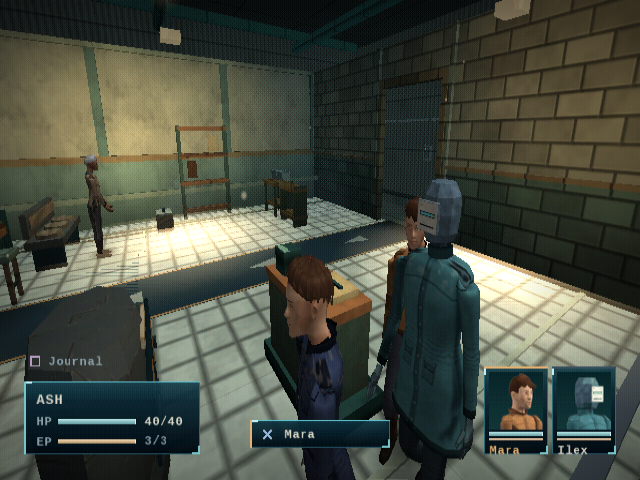
When The Last Signal started to look like a real game to me, I could also see everything that still felt off. The models were better. The crew had voices. Some rooms still looked like sets that had been put up for a scene that was about to start.
I’d asked the AI to look up how PlayStation 2 developers worked. It found useful material, and the game ran much better after the rendering work. I still wanted it to understand what I was seeing when I remembered a retail PS2 game. In the middle of that work I asked whether giving it the actual games would help. I suggested Bully. The two Final Fantasy games came out of the discussion, and I supplied all three.
I wanted the AI to play the openings. I asked it to walk the rooms, watch how people were framed when they spoke, look at light and atmosphere, and pay attention when fighting started. I also wanted it to look at our game the same way. If it came back saying “add more detail,” we’d still have to guess what to change in the next build.
Three different things done well
I brought up Bully because I remembered how convincing its world looked on a PS2. The agent walked from the gate through the courtyard and into the main hall. A hallway could have a dozen or so people around. Some were moving, others were just there, and people nearby reacted when a fight started. There were banners and signs you could recognize as belonging to that school, alongside details like the floor inlay. The room gives you things to notice well before it asks you to do anything.
The more surprising part was how small many of those details were. A sign can be a tiny picture on a flat surface. A few specific pictures let the floor, a doorway, or a wall tell you something about what kind of room you’re in. That gave me a way to describe what felt missing from some of our own rooms. I wanted a wall that had a reason to look the way it did, with notices or fittings that belonged there.
In the part of Final Fantasy X it studied, the camera changed as characters spoke. There’s a campfire conversation where it can show the group, bring you closer to a few people, and then let you see one face. Gestures and head turns do some of the work of telling you who has the floor. Elsewhere, the exploration camera is set up for the particular space. The agent could look at those examples and ask how much of our dialogue was being carried by the text box alone.
The early Final Fantasy XII scenes made the light jump out. Warm patches sit on cold stone, and people stand out from darker backgrounds. At one point what caught my attention in the study was the amount of information on screen during a fight. It gives you lines showing targets, little indicators over people, and a small selection of commands. It also gives you a chance to try what a tutorial just taught you. I asked the AI to look at all of that because a game can resemble the era in a screenshot and still feel wrong when you try to act.
What a pile of numbers could tell me
The study measured what each game sent to its graphics chip for selected pictures. The interesting outcome was that the games spent their resources in different ways. In two of the walking scenes, Bully used more than twice as many triangles to draw the world as Final Fantasy XII. Final Fantasy XII sent almost three times as much texture data in its sample. You can think of triangles as the shapes the game builds out of and textures as the pictures it paints on those shapes. If you’re trying to make a stone corridor feel real, a bigger number in the first column only gets you so far.
That helped get the conversation off the question of whether the PS2 was powerful enough. I knew the kinds of scenes I could remember playing. The agent now had examples that showed how differently one could build them. In our sample, we could see a few surfaces that were doing extra work and plenty that still looked flat.
The first change I could see
At the top of the study’s plan was lighting and atmosphere. The agent started with a light pool under a lamp. The first attempt existed in the code and barely showed up in the picture. The agent traced the color it was using to the lamp’s dark cable. Once it used the light, there was warm color on the floor near the group. I like that the first piece of the plan led to something I could spot in one picture.
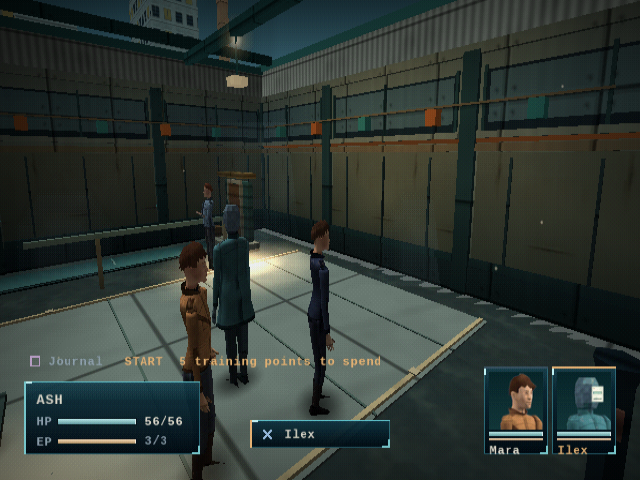
The first study covered roughly fifteen minutes of Bully, twelve of Final Fantasy X, and twenty of Final Fantasy XII. I’d asked for forty-five minutes each. These early samples gave us a place to start, and the later parts of each game still have things to teach us.
Where the rest of the study might take us
The plan calls for a room’s own textures and details, better separation between a speaker and whatever’s behind them, and conversations directed a shot at a time. I also want to see whether fights are readable with the changes the agent suggested. Those are separate things I can look at in later builds. A better wall doesn’t answer whether the player can tell who is attacking them.
For me, the most useful question is whether I can look at a scene and see what the people in it are doing, then forget about how it was built. If a room feels used, or a conversation lets me see someone hesitate before an answer, I’ll have a better idea of whether the game is ready for the first playthrough I’ve been saving.
Read why I started the project or how the AI played the game.