What Three Retail PS2 Games Spent Their Graphics Budget On
A first emulator capture study of Bully, Final Fantasy X, and Final Fantasy XII, and the first change it produced in The Last Signal.
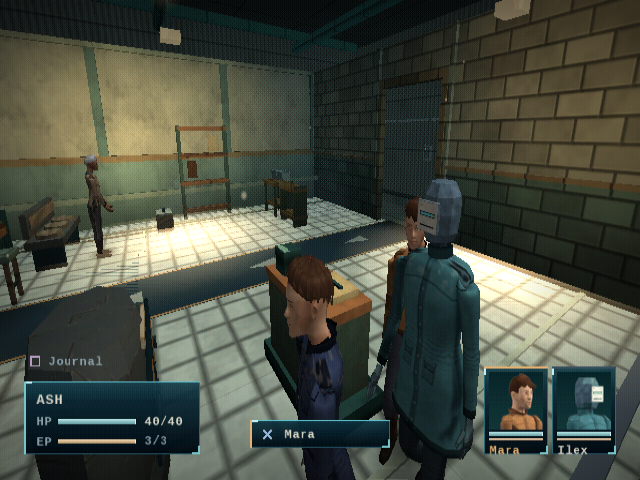
By the time I asked for the retail reference study, The Last Signal had a playable campaign and a timed emulator build. It still fell short of the look I wanted. I supplied three original PS2 games to study because they put different demands on the same hardware. Bully had a populated school, Final Fantasy X framed conversations and exploration very deliberately, and Final Fantasy XII had detailed characters and places worth looking at closely.
The project already had a hypothesis that a room could look better by spending more on geometry. The reference work gave that idea company. In the same scene budget you can spend on characters, texture variety, an authored camera, light, or just enough information on screen to tell the player what they can do. I wanted the agent to see which choices the shipped games actually made before it rewrote any more of our renderer.
Getting a comparable view of each game
The agent played early sections of the three retail games in PCSX2 2.8.2. It captured screenshots and graphics synthesizer dumps from walking, conversations, and the fights it reached. The capture set contains 22 retail breakdowns, and the project’s own scenes were captured and parsed with the same tool. The analysis used gameplay output and graphics commands observed in the emulator.
The samples were the PS2 discs for Bully (SLUS-21269), Final Fantasy X (SLUS-20312), and Final Fantasy XII (SLUS-20963). The checkpoint files include gate and hall scenes for Bully, campfire and field scenes for Final Fantasy X, and fortress and first-battle scenes for Final Fantasy XII. Matching the gameplay situations where possible helps with interpretation. A static cutscene close-up and a busy running view place very different demands on the same engine.
The table uses representative captured pictures. Triangle counts are drawing kicks sent to the GS, texture counts are textures used in the captured picture, and texture traffic is bytes re-sent during that picture. High fill estimates indicate repeated coverage of the same screen space by geometry or sprites. Resolution, camera framing, and scene activity vary among the games.
The parser reads the graphics packet stream and tracks primitive type, texture buffers and formats, transfers, color and depth buffers, and fog or blending state. Its output reports drawing intervals separated by vertical sync. The study grouped the work targeting the same frame buffer when describing a picture. The fill proxy sums projected area and divides by a fixed 640×448 reference. It can show that a scene layers a great deal of drawing over its image. Actual writes after depth, alpha, and clipping, or hardware cycles spent on those writes, would need a different measurement. Raw geometry sent to the chip also exceeds the count of drawing kicks in some captures.
| Sample | Triangles | Textures used | Texture bytes re-sent |
|---|---|---|---|
| The Last Signal, walking | 8,000 | 22 | 0 in this picture |
| Bully, courtyard walk | 47,000 | 157 | 0.89 MB |
| Bully, populated main hall | 43,700 | 175 | 1.02 MB |
| Final Fantasy X, field with bystanders | 20,300 | 87 | 1.6 MB |
| Final Fantasy XII, courtyard walk | 21,000 | 84 | 2.5 MB |
| Final Fantasy XII, first battle | 22,600 | 88 | 3.1 MB |
Specific textures, deliberate framing, and repeated fill
The Bully captures used a lot of small indexed textures, often 64×64 or 128×128 with 16 colors. About 3.3 MB of its 4 MB of GS memory was occupied by the two color buffers and depth buffer in the captured 640×448 configuration. Many textures could be brought through the remaining space. The notes estimate about 500–650 KB for a scene’s unique textures and 0.8–1.0 MB of uploads over examples in the capture set. A banner, poster, door, framed window, and inlay each get to say something specific about the setting.
The main hall illustrates the combined cost. One capture counted about 43,700 triangles and 175 texture uses with around 1 MB re-sent. Nearness and distance stayed readable in part because almost every triangle in the sampled game used fog. Captures showed fog, small shadows, and a pass reusing the frame buffer for a soft image effect. The project’s own frame is a useful point of comparison. A room that draws a handful of broad flat colors can stay within its current texture limits and still have very little sense of place.
In the Final Fantasy XII samples, the visible triangles were fewer and texture transfers were substantially larger. The 512×448 output gave the color and depth buffers a smaller footprint, and the captured courtyard used 84 textures with 2.5 MB re-sent. Many important sheets were 256×256 at 8 bits. The agent found separate face, body, and hair sheets for example lead characters. It also found architectural sheets with window frames, stone detail, and trim, and flat gradients that could be drawn over a surface to make it look lit.
A warm pool on cold stone can be a noticeable part of a composition without a dense mesh. The renderer can spend that work in repeated fill. The courtyard showed roughly 97 screen-equivalents of projected area by the parser’s estimate, and the first battle around 75. These samples offer a concrete reason to study overdraw and layered effects before assuming a shortage of triangles explains the entire visual gap.
Final Fantasy X used authored field cameras and cut to new angles through much of its sampled dialogue. A model could get its clothing, hair, hands, and a mirrored half-face from one tightly packed 256×256 indexed sheet. A cheekbone, brow shadow, or distinctive hair silhouette pays off when the camera puts the viewer near a person. A close-up sample needed about 9,900 drawing kicks and still looked substantially more deliberate than a face the player could see from anywhere in a room.
Presentation changes that don’t involve the graphics chip
There were useful observations in the short fight samples too. Final Fantasy XII uses colored target lines, damage numbers, health indicators, and a compact command box to show who is doing what. The early tutorial introduces a term and gives the player a chance to use it. Bully uses a radar marker and short prompts. Final Fantasy X often lets an in-engine shot and a label do the work of identifying a speaker. These examples each give the player a smaller thing to notice at a time.
Our dialogue doesn’t have to follow those games exactly. The actionable question is whether the next line feels like a person speaking in a room. The first design pass listed animated reactions, shot-by-shot framing, and a smaller text treatment as possible ways to get closer. A later pass can check that against the game’s own dialogue, player controls, and reading comfort on a TV.
What I asked the agent to try first
The first plan put light and atmosphere ahead of a deeper renderer rewrite. The comparisons pointed to plausible gains from lamp pools, glow, shadows that ground people, and depth cues. The first visible lamp pool is in the November 18 work. After some invisible attempts, the agent traced the issue to the sampled color coming from a dark lamp cable and then captured the working result.
The rest of the first plan has dependencies. Tighter character sheets change what needs to stay resident. Area-specific texture loading opens up room for more surface variety, at the cost of new loading and residency work. Set dressing is most useful where it can give a room visual clues about its purpose. Shorter dialogue screens and shot-by-shot staging need to be checked alongside the voice clips and input cues. Those decisions are cheaper to make with one example room than with every room already committed to the change.
The November 18 log is an example of why I still want a timing check with every pass. Two close-look views in the closed-room build produced slow pictures even though they are a very small part of a campaign. Diagnostics narrowed that problem to room geometry taking a slower path in those views. There was also a separate glow adjustment that kept the old halo count in the busiest rooms. A cost that disappears in a walking median can still show up when a conversation changes the camera.
Where the comparison stops
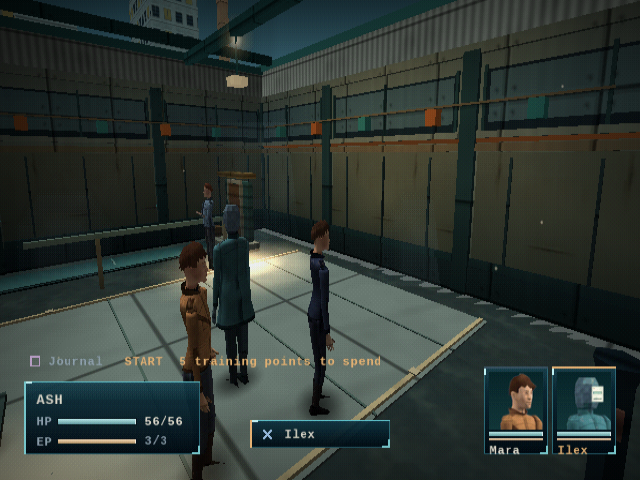
The study reached about 15 minutes of Bully, 12 of Final Fantasy X, and 20 of Final Fantasy XII. The original request was 45 minutes each. It missed a Final Fantasy XII town and a Final Fantasy X battle, and its combat and pacing coverage is particularly thin. The table describes sampled frames, so I’m treating the ranked plan as a starting point for experiments in The Last Signal.
There is another practical limit. A frame breakdown records the work that reached the GS. It gives clues about techniques a game is using. It leaves a lot to learn about asset authoring, how work was split between processors, and why a particular shot was built that way. The useful follow-up is an original change in our project, measured in a comparable scene, with a before-and-after picture I can actually judge.
The most useful result for me was that the visual target became something we could talk about in terms of specific shots, textures, and effects. Now the agent can show me a change in the game, and we can judge both the picture and what it cost.
The figures come from the November 18 reference study and its build/reference-study/NOTES.md, gsdump_stats.py, and per-scene reports. The working light pool and closed-room diagnostics were recorded at 7d5e7e0, followed by the glow-count adjustment at 8039b4e. PCSX2 project · PS2DEV toolchain